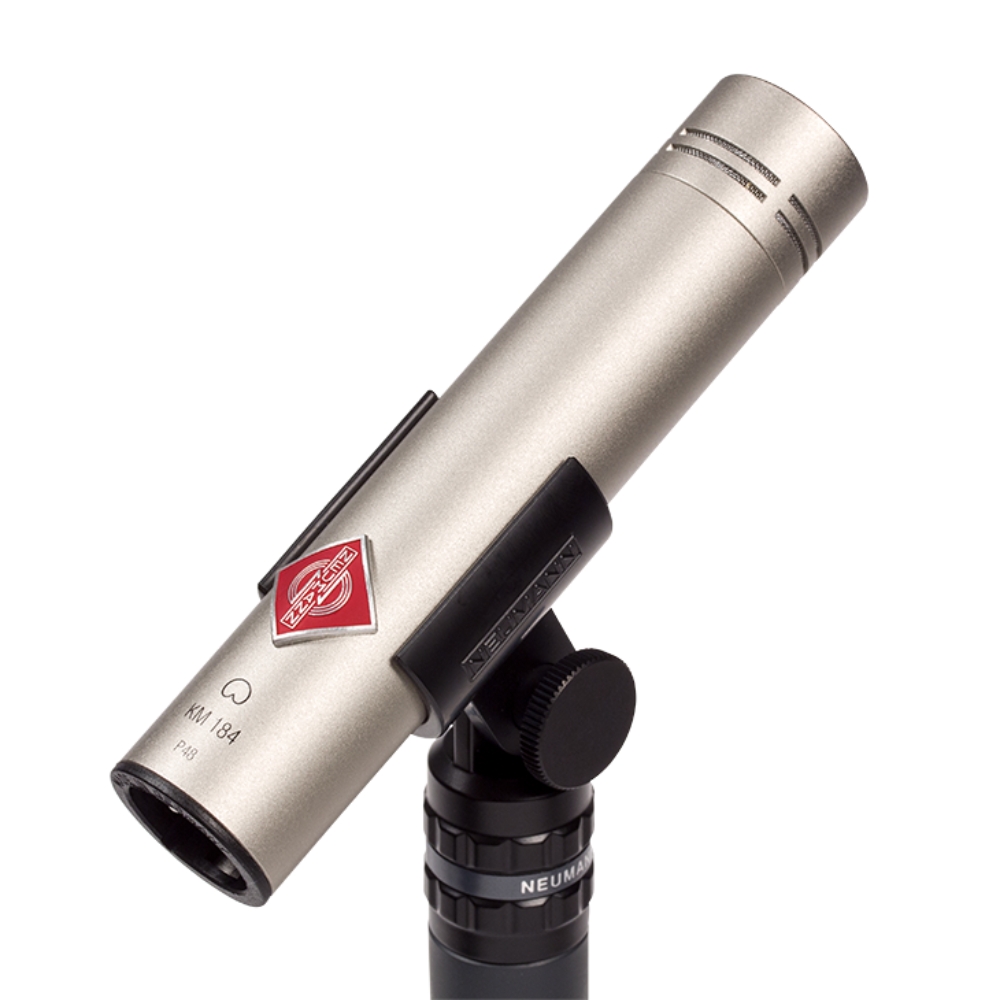
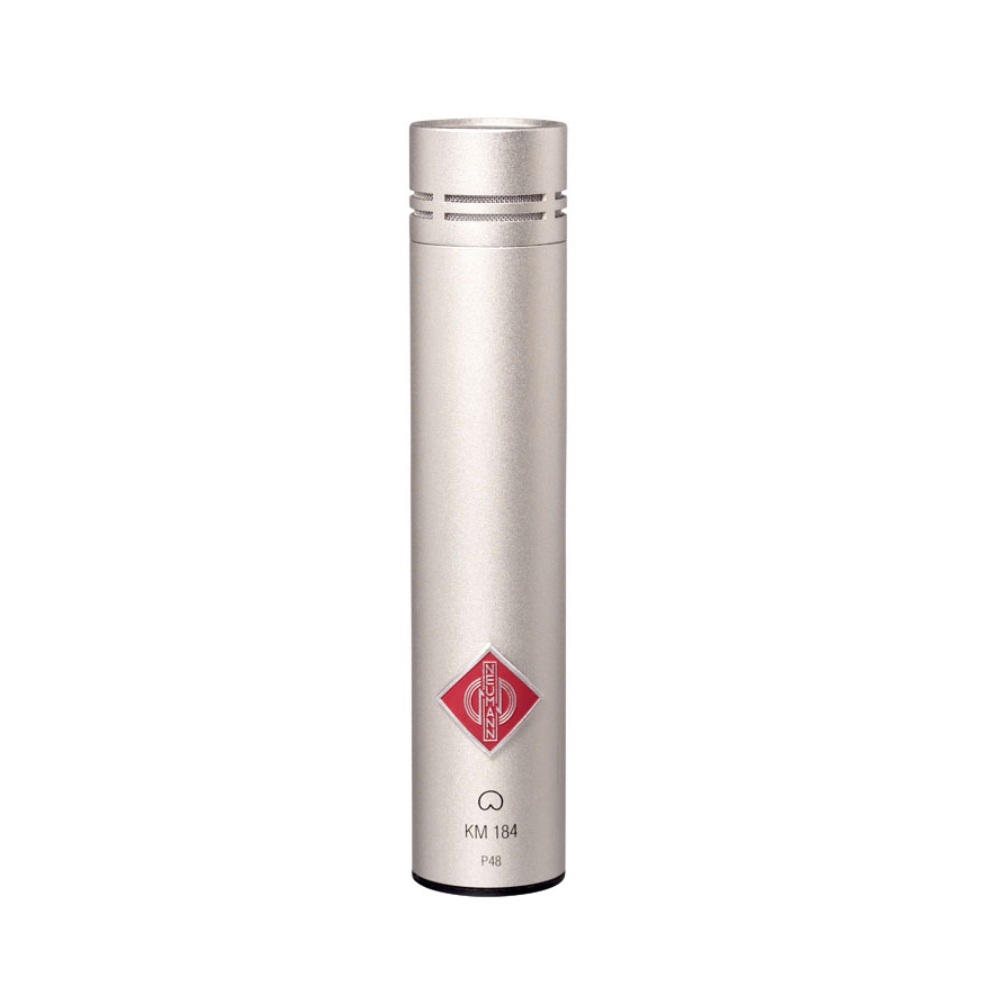
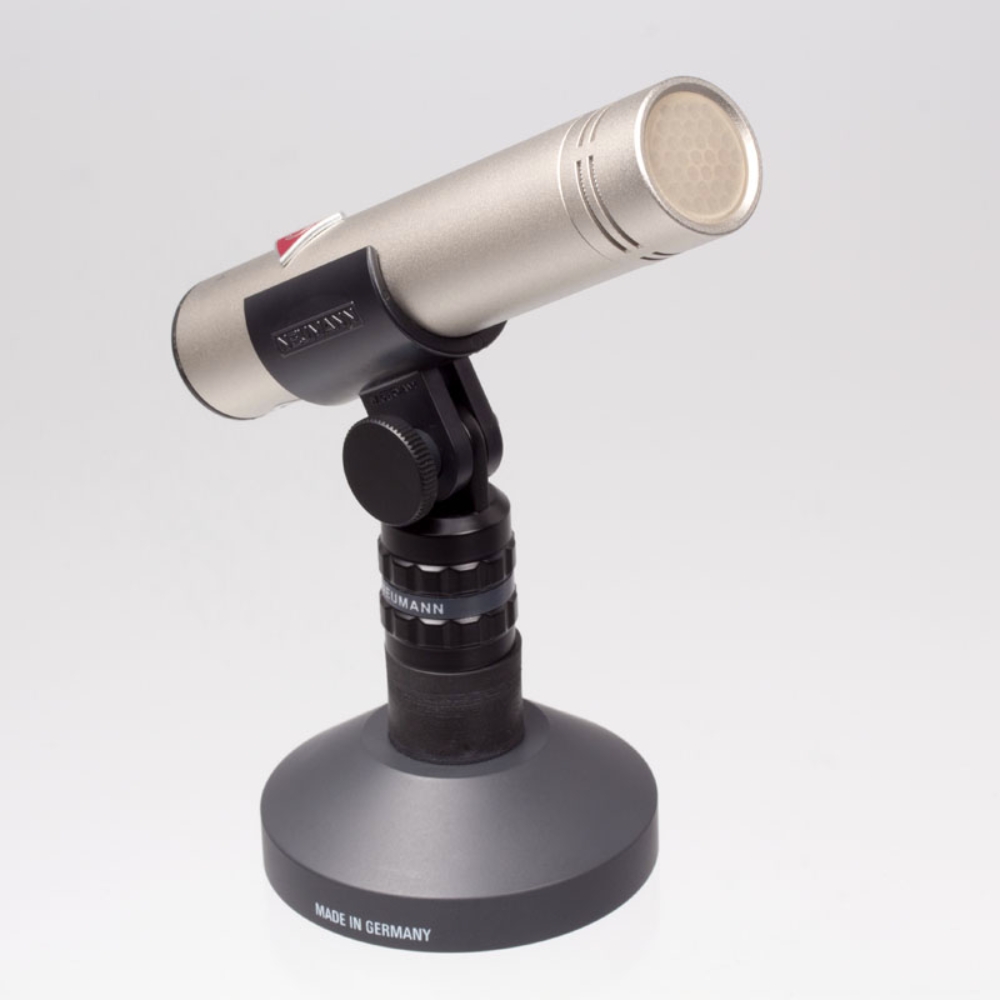
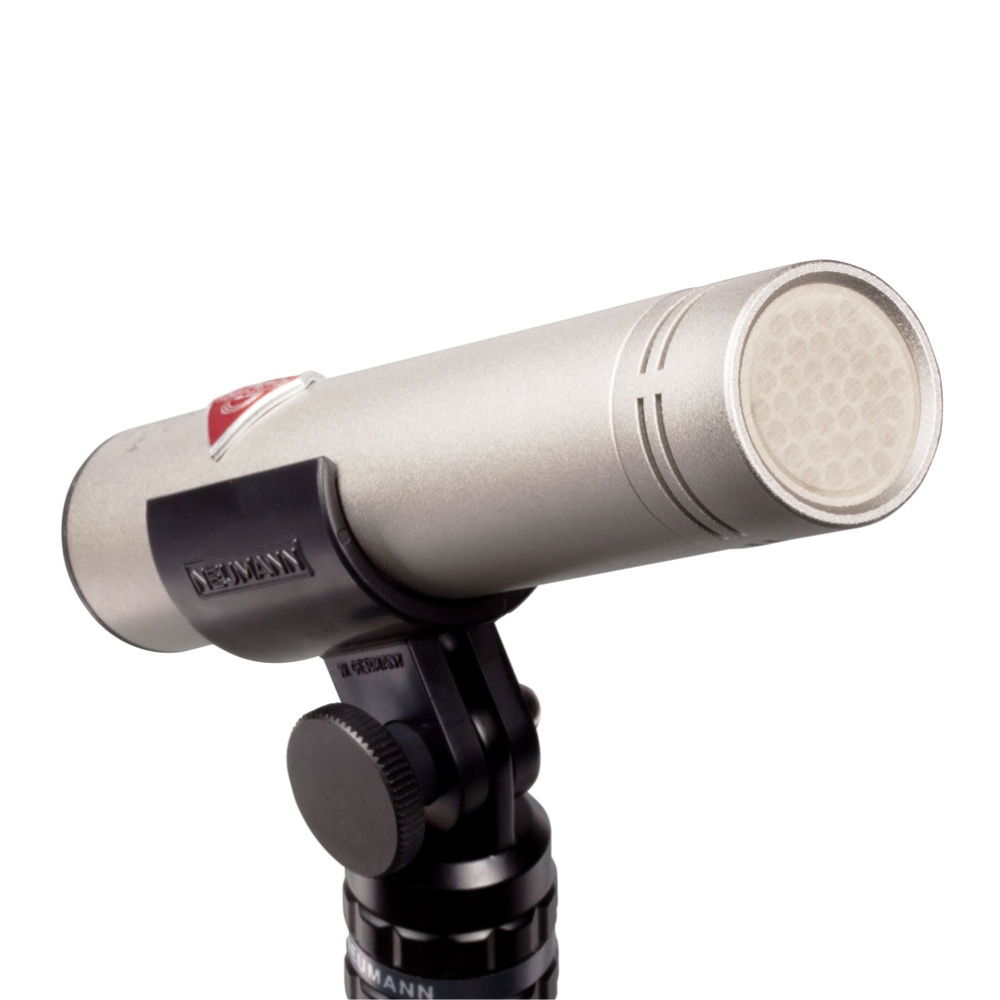
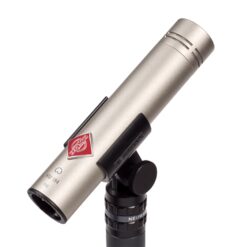
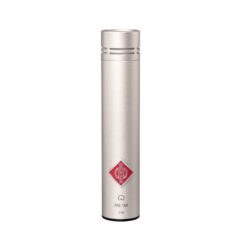
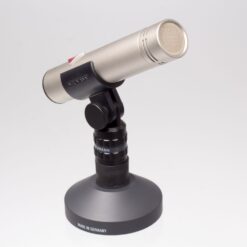
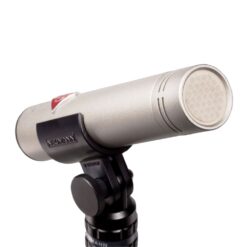
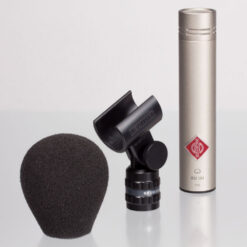
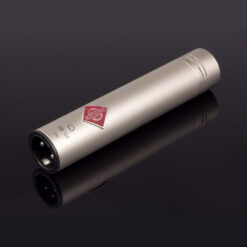
Neumann KM 184 – Small Diaphragm Condenser Microphone
OVERVIEW
UNCOLOURED, TRANSPARENT, VERSATILE
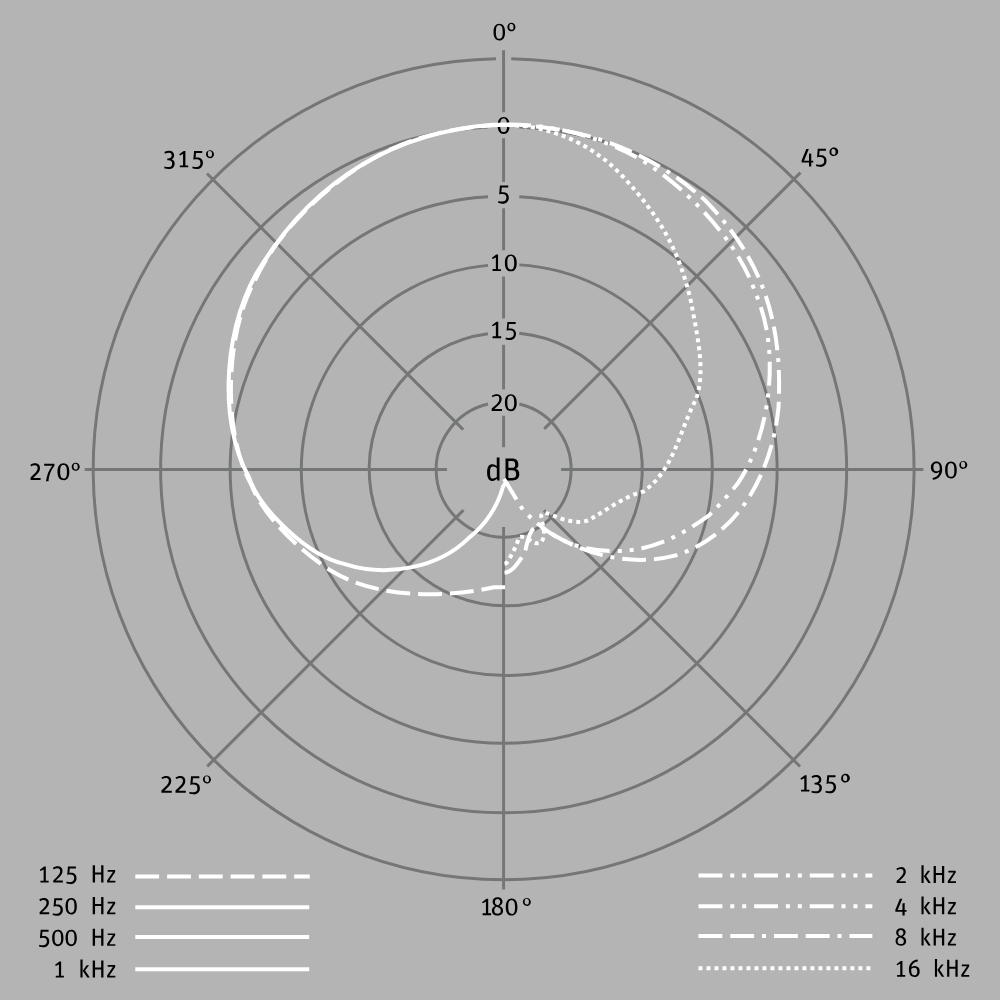
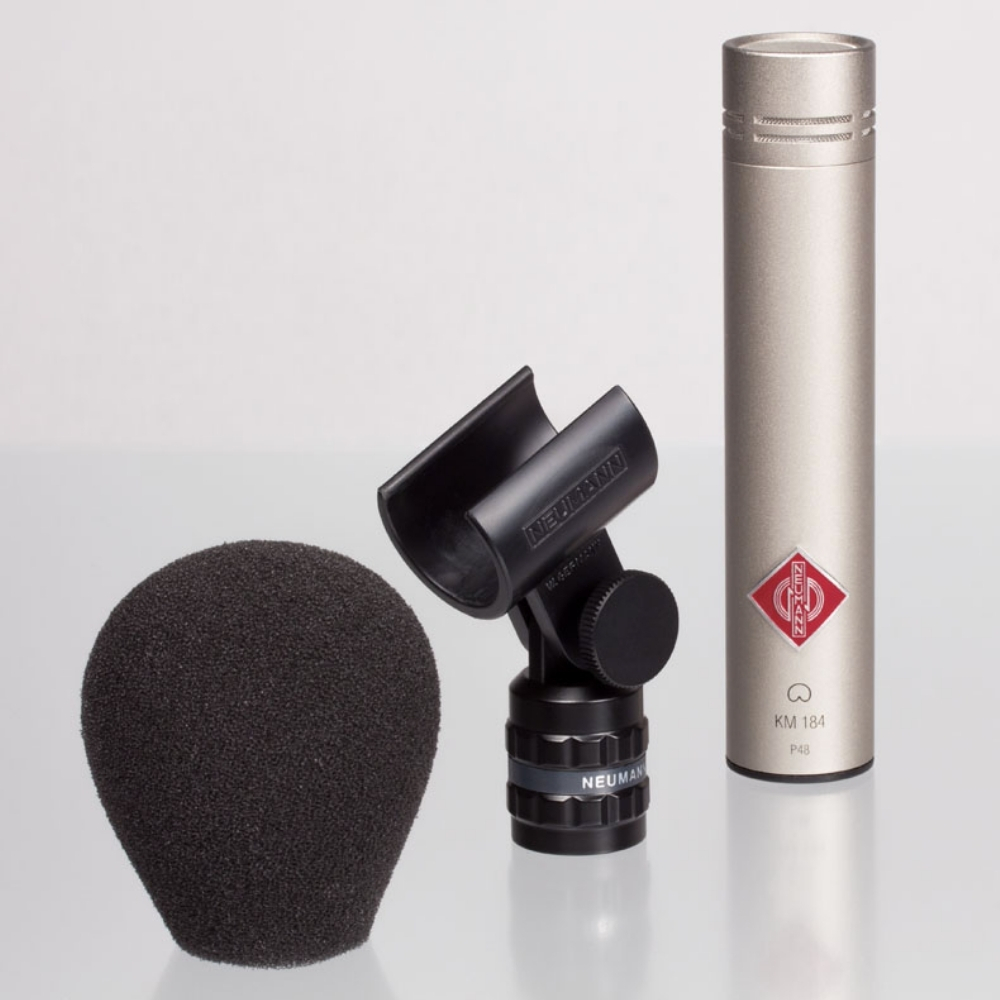
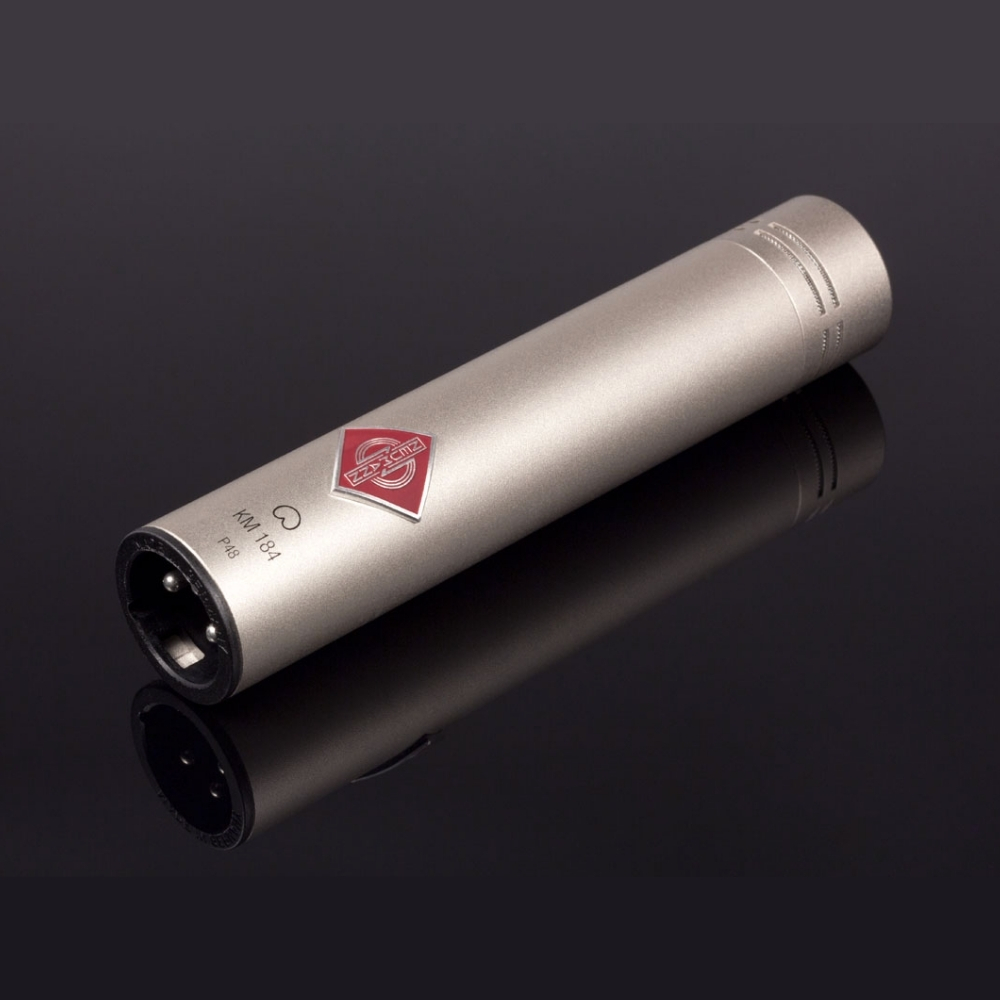
The KM 184 is a state-of-the-art small diaphragm condenser microphone with a uniform, frequency-independent cardioid polar pattern. Its very natural, transparent sound with very low self-noise and high SPL capability have made the KM 184 a worldwide stage and studio standard for many applications ranging from classical piano to heavy metal drums.
FAITHFUL
While many microphones, these days, are designed to add some sonic imprint of their own, there are many applications that require a faithful reproduction of the original acoustic event, without adding or removing anything. That’s where the Neumann KM 184 (cardioid) comes in. Because the KM 184 microphone is non-modular, it is more cost-effective than modular counterparts that offer a wide range of interchangeable capsule heads for analog and digital output stages.
CARDIOID
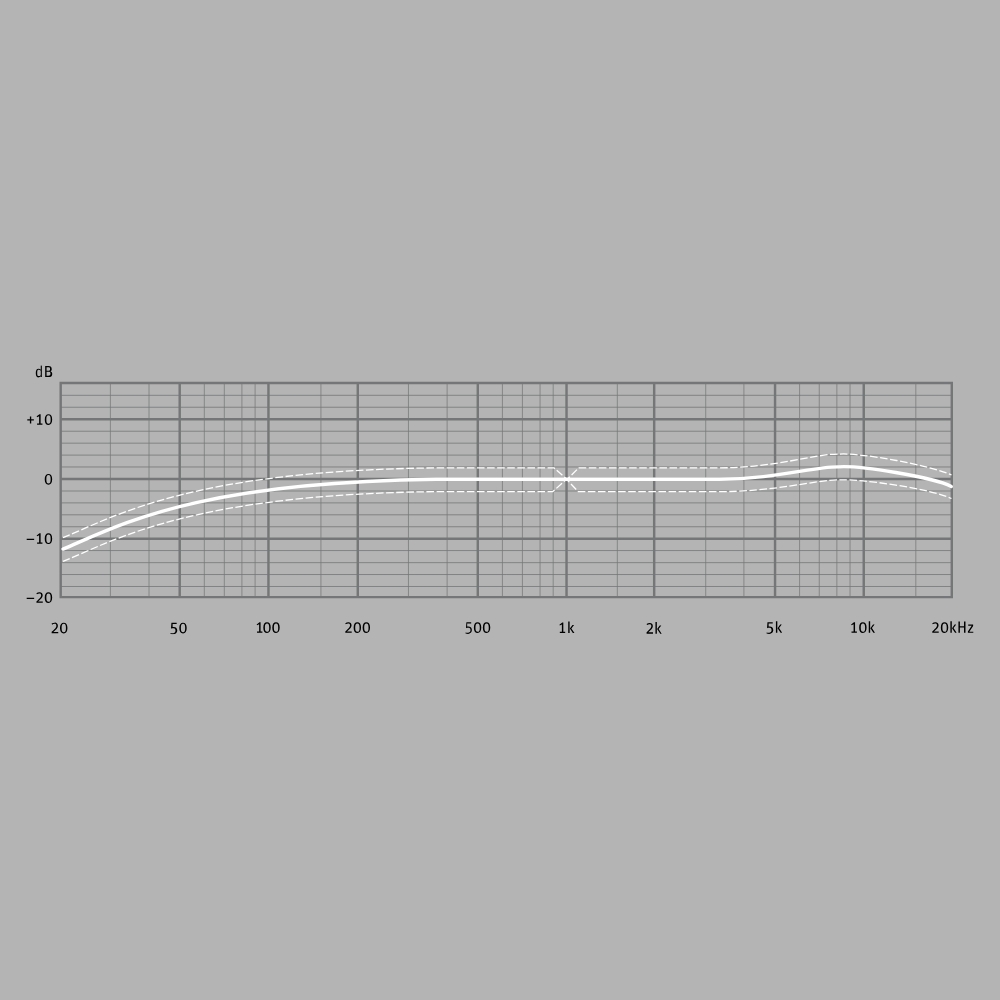
Despite its attractive pricing, the KM 184 offers state-of-the-art Neumann engineering. Its cardioid pattern is frequency-independent; rejection of rearward sound (180°) is excellent, even at low frequencies. In practical usage, there is no sound colouration over a wide pickup angle, which is crucial in multi-microphone setups and for precise stereo/surround imaging. The KM 184’s frequency response is very smooth and linear with a slight treble lift around 9 kHz for added brilliance. Its innovative transformerless head amplifier offers a wide dynamic range of 125 dB and is carefully designed to maintain the capsule’s sonic integrity. The KM 184 has a very low self-noise of only 13 dB-A and can handle high sound pressure levels of up to 138 dB free from distortion. Due to its low impedance output stage, the KM 184 can drive long cable runs of up to 300 meters (1000 feet) without transmission losses.
APPLICATIONS
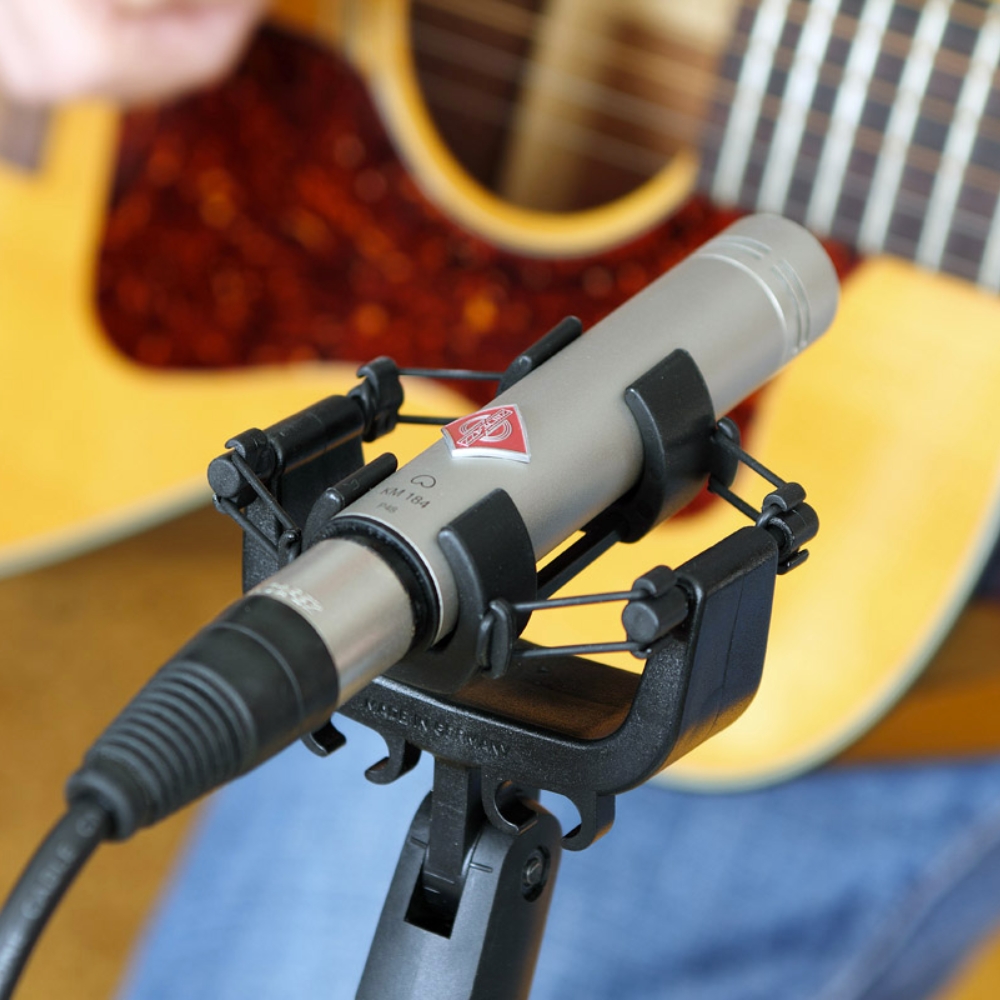
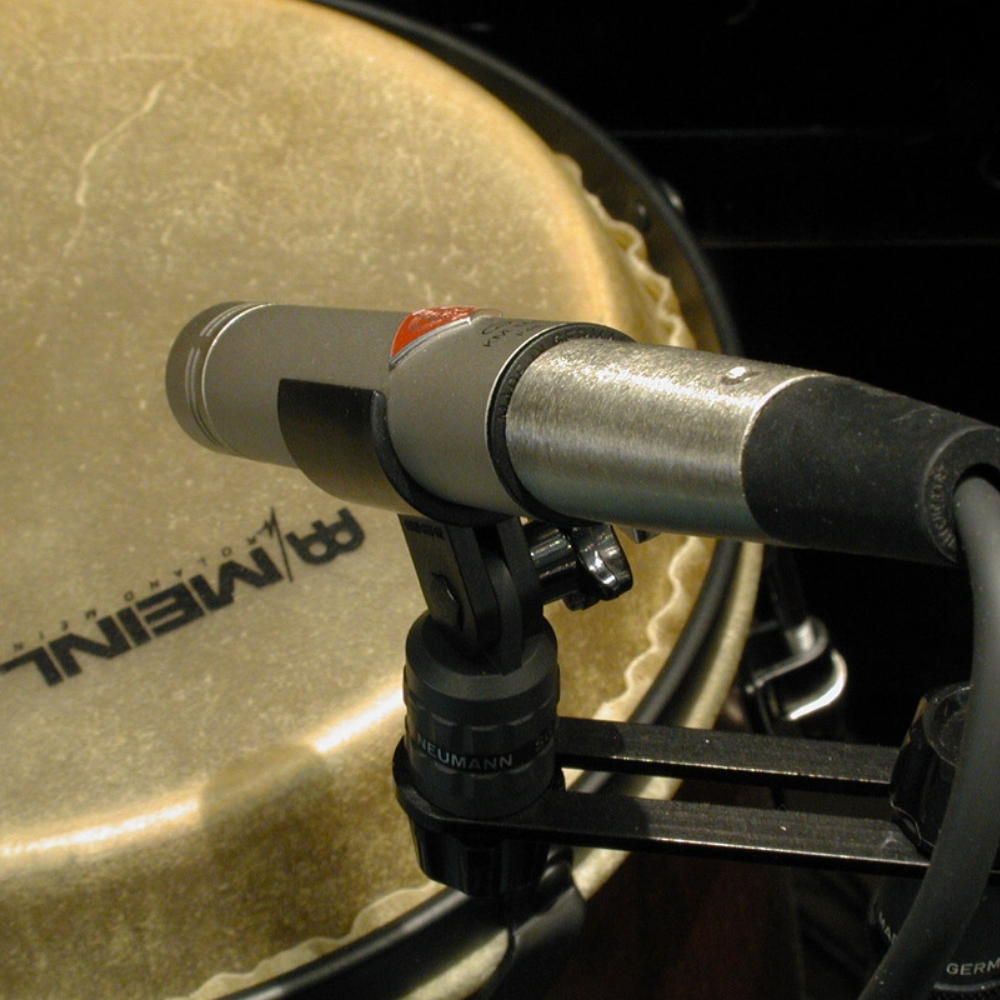
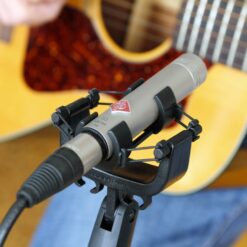
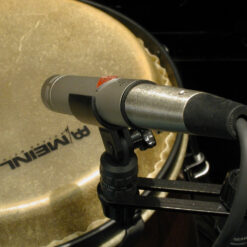
The KM 184 is a universal microphone for studio and stage applications. Its transparent sound makes the KM 184 a superb microphone for acoustic instruments, such as piano, percussion, drums, acoustic guitar, upright bass, violin, cello, woodwinds, and brass. The KM 184 can be used for soloists as well as ensembles. Thanks to its superior off-axis behaviour, the KM 184 is an excellent microphone for stereo and surround recording with perfect imaging. Although the KM 184 is not specially optimised for the human voice, it is often used for classical vocals and whenever sonic authenticity is paramount. Due to its small size, the KM 184 is visually unobtrusive and well-suited to TV and radio applications.
AWARDS
Winner of the 2000 Studio Sound Award.
KEY HIGHLIGHTS
Uncoloured, Transparent Sound:
The KM 184 delivers a highly natural and faithful sound reproduction, capturing acoustic sources exactly as they are. Ideal when sonic accuracy and authenticity are paramount.
Frequency-Independent Cardioid Pattern:
Its uniform cardioid polar pattern offers excellent rear rejection with no off-axis colouration, ensuring precise imaging in stereo, surround, and multi-mic setups.
Ultra-Low Self-Noise:
With an exceptionally low self-noise of just 13 dB-A and an 81 dB signal-to-noise ratio, the KM 184 excels in quiet, detailed recordings such as classical music and acoustic instruments.
High SPL Handling:
Capable of handling sound pressure levels up to 138 dB without distortion, the KM 184 performs effortlessly on loud sources like drums, percussion, and brass.
Transformerless Neumann Electronics:
The transformerless head amplifier delivers a wide dynamic range and preserves the capsule’s sonic integrity while allowing long cable runs without signal loss.
Compact & Broadcast-Ready:
Its slim, unobtrusive design makes the KM 184 ideal for broadcast, film, live stage use, and concert halls where visual discretion matters.
Proven Industry Standard:
A global studio and stage favourite – and winner of the Studio Sound Award – the KM 184 remains a trusted choice across professional recording, live sound, and education.
FEATURES
- Uniform cardioid pattern without off-axis colouration
- Linear frequency response with a slight treble lift
- Very low self-noise (13 dB-A)
- Low impedance output for long cable runs without transmission losses
- Transformerless circuitry
- Compact size, visually unobtrusive
TECHNICAL SPECS
Acoustical Operating Principle: Pressure gradient transducer
Directional Pattern: Cardioid
Frequency Range: 20 Hz – 20 kHz
Sensitivity at 1 kHz into 1 kohm: 15 mV/Pa ± 1 dB
Rated Impedance: 50 ohms
Rated Load Impedance: 1 kohms
Equivalent noise level, CCIR: 22 dB
Equivalent Noise Level, A-Weighted: 13 dB-A
Maximum SPL for THD 0.5%: 138 dB
Signal-to-Noise Ratio, CCIR (re. 94 dB SPL): 72 dB
Signal-to-Noise Ratio, A-Weighted (re. 94 dB SPL): 81 dB
Maximum Output Voltage: 10 dBu
Supply Voltage (P48, IEC 61938): 48 V ± 4 V
Current Consumption (P48, IEC 61938): 3.2 mA
Matching Connector: XLR 3-Pin F
Weight: 80 g
Diameter: 22 mm
Length: 107 mm
Colour/Finish: Nickel